

Patients considering a full-arch tooth replacement naturally want to know how soon they can regain a complete, functional smile. The timeline for on all 4 dental implants depends on each person’s oral health, bone density, and whether extractions or grafting are needed. Temporary teeth may be placed on the day of surgery, but the implants need time to integrate with the jawbone before we can complete the final bridge. Traditional treatment often takes about four to eight months from consultation to the finished restoration.
Here is a quick look at a timeline:
| Stage | What happens |
| Consultation | We assess your oral health and plan your treatment. |
| Preparation | Extractions or bone grafting are completed if needed. |
| Implant surgery | Implants are placed; some patients receive temporary teeth. |
| Healing | The implants integrate with the jawbone, often over three to six months. |
| Final bridge | We take scans or impressions, design the restoration, secure it to the implants, and check its fit and bite. |
What Does the Treatment Involve?
This full-arch restoration uses four traditional dental implants to support a fixed set of replacement teeth. Instead of placing a separate implant for every missing tooth, the dentist positions four posts at carefully selected locations in the upper or lower jaw. The posterior implants may be placed at an angle to make strategic use of the available bone. This approach can sometimes reduce the need for bone grafting, but it does not eliminate preparatory procedures in every case.
Many treatment plans involve two restorations. A temporary bridge may be attached soon after surgery so the patient does not have to remain without teeth during healing. After the implants have integrated with the jawbone, the temporary restoration is replaced with a custom final bridge.
Step One: Consultation and Diagnostic Imaging
The process begins with a comprehensive consultation. We discuss the patient’s concerns, goals, medical history, medications, and past dental experiences. We also examine the teeth, gums, bite, and overall condition of the mouth.
Diagnostic imaging is essential for evaluating bone volume and locating important anatomical structures. Three-dimensional scans can help determine where implants may be positioned and whether additional procedures are necessary. Impressions or digital scans may also be collected to begin planning the prosthetic teeth.
Some patients can move forward quickly after this appointment. Others may need medical clearance or treatment for an active oral health issue first. The planning stage may take a few days or several weeks, depending on the complexity of the case and the work required to prepare a customized plan.
Step Two: Preparatory Dental Care
Remaining teeth that cannot be saved may need to be extracted. Depending on the patient’s condition and treatment plan, extractions may occur during the implant procedure or at an earlier appointment. Active gum disease and other infections should also be addressed. Placing implants in an unhealthy oral environment can interfere with healing and affect the long-term outcome. Some patients need periodontal care before surgery can be scheduled.
Bone grafting has one of the greatest potential effects on the overall timeline. If the jaw does not have enough healthy bone to support traditional implants, grafting may be recommended. A graft commonly needs several months to integrate before implant placement, although the exact waiting period depends on its location and extent. Certain patients may qualify for a plan that avoids grafting, but that determination can only be made after an individual evaluation.
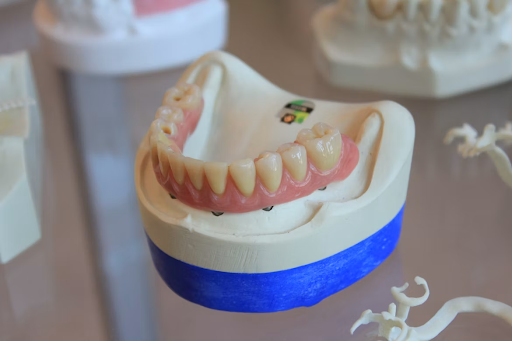
Step Three: Implant Placement and Temporary Teeth
The surgical appointment may include removing failing teeth, preparing the implant sites, placing four implant posts, and attaching a temporary restoration. The length of the appointment varies according to whether one or both arches are being treated and whether additional procedures are performed.
Immediate placement of temporary teeth is not appropriate for everyone. The implants must achieve sufficient stability, and the patient must follow restrictions designed to protect them. If the implants cannot safely support a temporary bridge, another temporary tooth replacement may be used during healing.
Step Four: Healing and Osseointegration
After surgery, the gum tissue begins healing, but an equally important process is occurring below the surface. Osseointegration is the biological process through which the jawbone forms a stable connection with the implant posts. This phase often lasts approximately three to six months. Healing time varies based on the treatment location, bone quality, general health, tobacco use, oral hygiene, and how closely post-operative instructions are followed.
Patients usually begin with soft foods and gradually expand their diet according to professional guidance. Temporary teeth are not designed to handle the same biting forces as a final restoration, so avoiding hard, crunchy, and sticky foods is important. Follow-up visits allow us to monitor healing, evaluate the temporary bridge, and address any pressure areas or bite concerns.
Step Five: Designing the Final Bridge
Once the implants have integrated successfully, the restorative phase can begin. New impressions or digital scans may be taken to capture the healed tissues and implant positions. We also evaluate the bite, tooth shape, shade, smile line, speech, and facial proportions.
When the final bridge is ready, it is secured to the implants. We check its fit, appearance, and bite and explain how to clean around and underneath the restoration. Completing this stage often places the total traditional treatment timeline in the range of four to eight months.
Why One Patient’s Timeline May Differ from Another’s
Online estimates can be helpful, but they cannot predict an individual treatment schedule. Timing may be influenced by:
- Whether one arch or both arches require treatment
- The number and condition of remaining teeth
- Gum health and the presence of infection
- Jawbone volume and density
- The need for grafting or other preparatory care
- Implant stability at the time of surgery
- Healing response and general health
- Smoking or other risk factors
- The design and materials used for the final bridge
Keeping all follow-up appointments and maintaining excellent oral hygiene can help the process remain on schedule. Patients should contact the dental office promptly if they experience increasing pain, swelling, bleeding, movement in the temporary restoration, or other unexpected changes.
FAQ
Can I get teeth the same day?
Possibly. For eligible patients, we may be able to place implants and attach fixed temporary teeth on the day of surgery. Those teeth let you leave with a smile while your implants heal; the final bridge is completed later. We’ll determine whether same-day teeth are appropriate during your consultation.
How long is the surgery?
The time varies based on your treatment plan, including whether we need to remove teeth or perform other procedures. We’ll explain the expected length of your appointment after reviewing your scans and planning the surgery.
Does bone grafting add time?
It can. If a graft needs to heal before we place the implants, it adds a separate healing stage. In some cases, grafting and implant placement may be performed during the same surgery.
How long do All-on-4 implants last?
All-on-4 implants are intended as a long-term tooth replacement option, but no specific lifespan can be guaranteed. Their longevity depends on factors such as healing, oral health, daily cleaning, and regular dental care. The bridge and the implants are separate parts of the restoration, and the bridge may need maintenance over time.
Start with a Personalized Implant Consultation
The complete timeline for on all 4 dental implants may extend for several months, even when temporary teeth are provided on surgery day. Planning, any necessary preparatory care, implant placement, integration, and fabrication of the final bridge all contribute to the process. Patients interested in a faster or less invasive solution may also qualify for a mini implant-supported alternative.
At Vegas Dental Experts, we provide personalized full-mouth restoration options at our Las Vegas and Henderson offices. We can complete your examination, take X-rays and a CT scan, and develop a custom treatment plan that explains your expected timeline and costs. Contact us today to schedule a free consultation and discover which implant solution is right for your smile.
